Programme
Programme
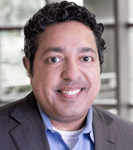
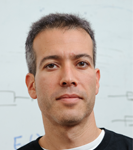
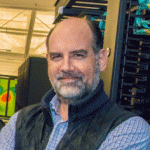
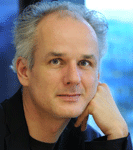
The scientific program includes keynotes by leading researchers in the field (Prof Katherine Pollard and Prof Hoon Cho).
Schedule
Wednesday, 15 July 2026
Thursday, 16 July 2026
Keynotes
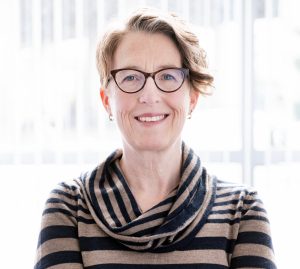
Director of the Gladstone Institute of Data Science & Biotechnology
Investigator at the Chan Zuckerberg Biohub
Professor of Bioinformatics at UCSF
Keynote Title: Strain-resolved metagenomics enables detection of bacterial genes associated with human traits
Abstract:
Metagenomic data holds great promise for characterizing human-associated microbes at the strain level. However, a deeply sequenced tree of life poses many challenges for traditional bioinformatics approaches, ranging from computational complexity to alignment errors and blurred species boundaries. This talk will explore these issues and some emerging solutions that enable strain-level and gene-level characterization of microbiomes. These tools make it possible to link microbiome genotypes with human traits at biobank scale. A mixed modeling approach will be presented along with some examples for how it can be used to generate testable causal hypotheses.
About the speaker:
Dr. Katherine S. Pollard is Director of the Gladstone Institute of Data Science & Biotechnology, Investigator at the Chan Zuckerberg Biohub, and Professor of Bioinformatics at UCSF. Her lab develops machine learning models and open-source bioinformatics software for predictive understanding and AI-guided experimentation with an emphasize on human genetics and genomics. Previously, Dr. Pollard was an assistant professor in the University of California, Davis Genome Center and Department of Statistics. She earned her PhD in Biostatistics from the University of California, Berkeley and was a comparative genomics postdoctoral fellow at the University of California, Santa Cruz. She was awarded the Thomas J. Watson Fellowship, the Sloan Research Fellowship, and the Alumna of the Year from UC Berkeley. She is a member of the National Academy of Medicine and a Fellow of the American Association for the Advancement of Science, International Society for Computational Biology, American Institute for Medical and Biological Engineering, and California Academy of Sciences.
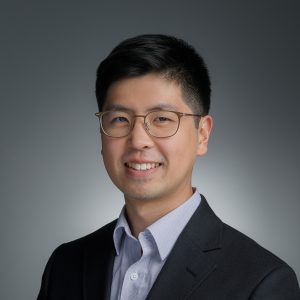
Assistant Professor of Biomedical Informatics & Data Science and of Computer Science at Yale
Director of Graduate Admissions for the Human Genome Sciences PhD Program at Yale
Keynote Title: Towards Privacy-Preserving Genomics: Understanding and Mitigating Risks
Abstract:
As genomic datasets continue to expand in scale, diversity, and modality, the privacy implications of sharing massive amounts of human data are becoming increasingly urgent. I will discuss how principled mathematical frameworks for quantifying privacy risk can deepen our understanding of genomic privacy while guiding the development of practical methods for privacy-preserving data sharing and analysis. I will highlight recent work on vulnerabilities in genome imputation services, linkage risks in transcriptomic data, and formal approaches for genetic association studies with privacy guarantees. I will conclude with an outlook on how community-driven efforts can accelerate progress in this area, enabling the scientific community to maximize the value of data sharing while safeguarding the individuals who make such research possible.
About the speaker:
Hyunghoon (Hoon) Cho, PhD, is an Assistant Professor of Biomedical Informatics & Data Science and of Computer Science at Yale. He also serves as Director of Graduate Admissions for the Human Genome Sciences PhD Program at Yale. He received his PhD in Electrical Engineering and Computer Science from MIT in 2019 and previously earned his MS and BS with Honors in Computer Science from Stanford University. Prior to joining Yale, he was a Schmidt Fellow and Principal Investigator at the Broad Institute of MIT and Harvard. His research focuses on overcoming key computational challenges in analyzing massive and distributed biomedical data, creating modern tools based on applied cryptography and machine learning. He is particularly interested in developing privacy-preserving, scalable AI methods and mathematical models for extracting insights from complex genomic data to advance human health. He is a recipient of the NIH Director’s Early Independence Award.